Pavlova meringue. How HR teaches people to crack quietly
🎧 Listen (Audio)
Audio versions are read by a synthetic voice.
Listen in the Dobre Państwo podcast (Spotify) RSS
The Pavlova meringue was born of rapture over Anna Pavlova. Critics wrote of her feathery flight that defied gravity. Confectioners decided to create a dessert just as light, delicate and dazzling.
HR would have turned it into a job description.
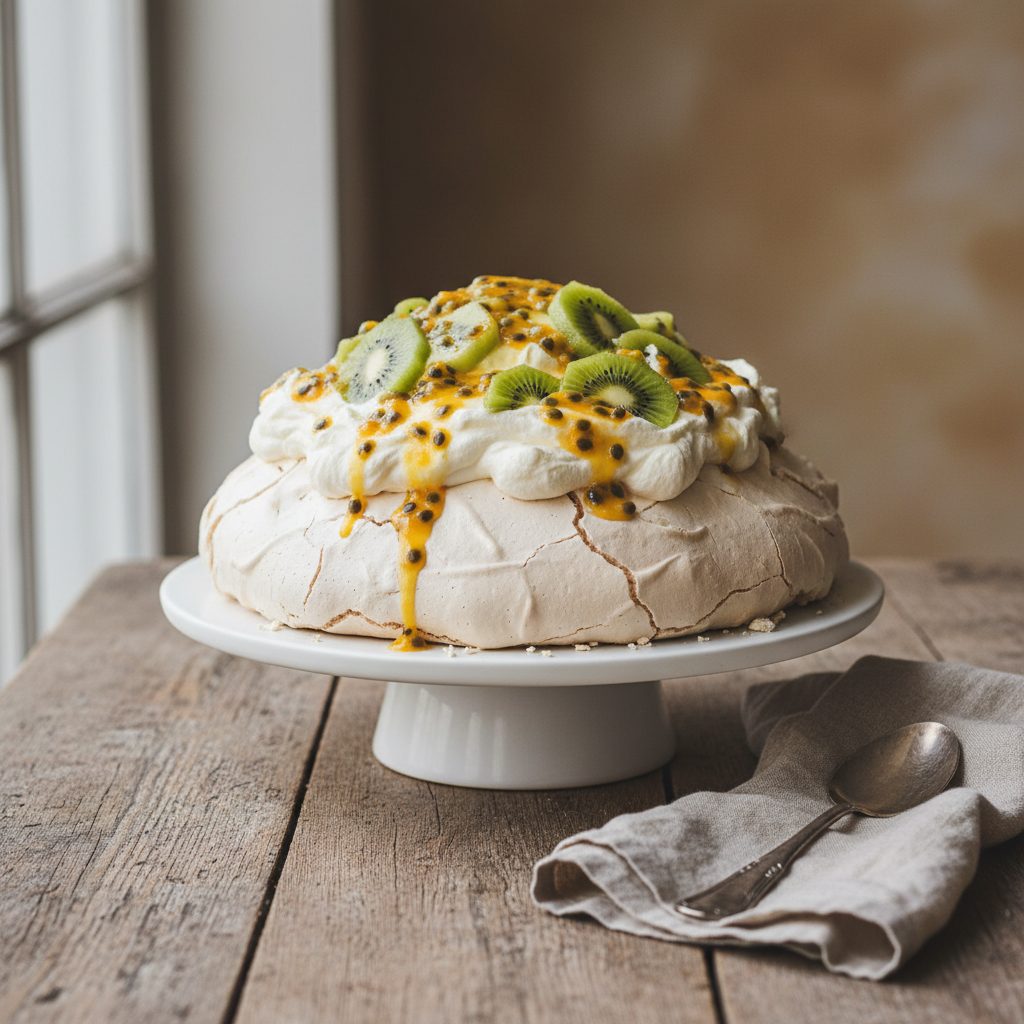
On the outside Pavlova is to be hard, glossy and presentable. Inside it should stay soft, moist and yielding to pressure. It must look good in a photo, survive transport, cause no trouble and not fall apart in front of the board.
The ideal employee is to be resilient but sensitive. Independent but obedient. They are to show initiative, but never question a superior's decision. They should look after their wellbeing, preferably after hours. They are to know their worth, but should not say it out loud during salary negotiations.
When a person cracks under pressure, the organisation does not ask who kept turning up the temperature. It asks why the person was not more resilient.
Meringue demands patience. The egg whites must be at the right temperature. Sugar has to be added gradually. The structure has to be stabilised. Drying takes a long time, and sudden cooling ends in catastrophe.
In a corporation the process is called onboarding, although it often consists of throwing a person into the oven and watching to see whether they survive the probation period.
The manager says he needs an employee who is resistant to stress. He does not add that the source of the stress will be chaos, contradictory instructions, understaffing, micromanagement and messages sent in the evening with the note "no rush, tomorrow morning".
HR replies that it is worth taking care of one's digital hygiene.
It is like setting the kitchen on fire and sending the crew a webinar on correct breathing.
Pavlova became the heroine of a war between Australia and New Zealand. Both countries argue over who created the dessert. One side adds passion fruit, the other kiwi, and each wants to appropriate the success.
That is how many organisations work. When a project succeeds, success has many fathers, three steering committees and a presentation by the CEO. When a project falls apart, it suddenly turns out that one specialist on a fixed-term contract was responsible for it.
Poland added its own myth to Pavlova's story, about eating meringue with a knife and fork. Jolanta Kwaśniewska was in fact showing how to eat a cream puff, but the fact lost to a political story.
That ought to sound familiar to personnel departments. In organisations, fact often loses to narrative. Bullying becomes difficult communication. Work overload is called a period of intensive growth. A good person leaving is described as natural turnover. Cost-cutting is presented as structural optimisation.
The language of HR does not serve to describe reality. Sometimes it serves to powder it.
Meringue should not be cut with a knife, because pressure destroys its structure. Nor should a person be treated as material to be cut, pressed and portioned according to Excel.
A good meringue can crack. So can a good employee.
The difference is that the confectioner takes responsibility for temperature, proportions and time.
The work overseer orders another resilience training course.
## A dessert that defies gravity
The Pavlova meringue is a tribute to the Russian prima ballerina Anna Pavlova. In April 1911 a critic from "The Observer", trying to describe her dancing, wrote of a wonderful, feathery flight that seemed to defy the law of gravity. That impression of weightlessness, akin to a ballerina's tulle tutu, gave confectioners the idea. The dessert was to float above the plate the way she floated above the stage.
The name did not attach itself to meringue straight away. The first recipes from 1911 and 1927 called "Pavlova" described multicoloured layered jellies. Only in the 1930s did the prima ballerina's name become firmly linked with egg whites and sugar. Fame can spend a long time looking for the right vessel.
## Shell and foam
Classic French meringue is meant to be dry and crisp all the way through. Pavlova lives on contrast: a brittle, porcelain shell and a moist, foamy interior that confectioners call marshmallowy. Everything depends on a few simple rules that cannot be got round.
The egg whites must be at room temperature, because that is when they take in air best. Fine white sugar must dissolve completely. Undissolved crystals crystallise and syrup leaks out of the meringue in the oven. Starch, potato or corn, binds the moisture inside and gives the foamy texture. Acid, lemon juice or vinegar, stabilises the foam. There are no rebellious ingredients here. Only badly treated ones.
The most interesting thing is that Pavlova is not really baked. It is dried. Whisking starts with a "beer foam", and adding the sugar gradually at the mixer's highest speed can take as long as 40 minutes. The oven starts at 130–150°C, and then the temperature is immediately lowered to 90–120°C. Drying takes from an hour and a half to three hours. Cooling must be slow, with the oven door ajar, because thermal shock blows the structure apart. Here the metaphor writes itself: what cracks rarely cracks through its own fault.
## The great meringue war
The dispute over Pavlova's origins is among the most fervent in the history of gastronomy. Australia points to Bert Sachse, head chef at the Esplanade Hotel in Perth, who is said to have devised the recipe in 1935. The name supposedly came from the hotel manager's exclamation that the dessert was "light as Pavlova".
New Zealand dates the dessert to 1926 and links it to the ballerina's visit to Wellington. Its crowning piece of evidence is the 2008 book by Prof. Helen Leach of the University of Otago, "The Pavlova Story: A Slice of New Zealand's Culinary History". The researcher documented 21 New Zealand recipes for a Pavlova meringue cake from before 1940, whereas the first Australian record dates from 1935. The Oxford dictionary gave New Zealand precedence and cited 1927 as the date of the first written mention.
The most perverse thing, however, is that both sides may be wrong. Food historians point to a European ancestor: the Austrian Spanische Windtorte, popular at the Habsburg court. The recipes reached America, and from there the Antipodes, thanks to instructions printed on packets of imported Maizena cornflour. A success two nations fight over had a third father and an advertisement on a box. Every marketing department knows the feeling.
The war continues in the decoration. Australia puts passion fruit pulp on top, New Zealand slices of kiwi. On social media the term "The Pavlova Wars" has stuck for the rows that follow every cooking show that attributes the dessert to only one side. There is also a war of size. In Christchurch in 2010 a Pavlova of 50 square metres was made, in the shape of a rugby pitch, with a silver fern, from 10,000 egg whites. Norway answered in 2015 with a meringue of 88 square metres, and Finland in the same year with the world's longest strawberry meringue, measuring 106.25 metres. Lightness, it seems, can also be measured in metres.
## Knife, fork and tapes
Pavlova must be decorated at the last moment. Whipped cream, today sometimes with mascarpone, and fruit go on top just before serving. Delay makes the meringue start to "weep": hygroscopic sugar draws moisture from the cream and ruins the shell. A knife is avoided, because pressure shatters the dessert into splinters. That leaves a teaspoon or a small dessert fork.
Poland added its own chapter to this story. According to the myth, Jolanta Kwaśniewska taught viewers to eat meringue with a knife and fork. In reality, in the programme "Lekcja stylu" (A Lesson in Style) on TVN Style, she showed how to eat a cream puff, where choux pastry and escaping filling justify using a knife. She herself explained that small meringues are eaten with the fingers, and desserts like Pavlova with a teaspoon or a small fork. The myth, however, lived a life of its own. In 2006, during the tapes affair, Józef Oleksy, in a recorded conversation with Aleksander Gudzowaty, scoffed that "she teaches how to eat meringue with a knife and fork". The sentence, groundless on the merits, became a symbol of the supposed snobbery of the elites.
A joke even emerged: you will recognise a true Polish diplomat by the fact that he will eat meringue with a knife and fork, not soil his suit and still pretend he is enjoying it. Confectioners have a shorter maxim: whoever bakes meringue in a hurry is asking for a culinary sin. There is a third one too, the best. Life is like Pavlova, a hard shell outside, softness within, and you have to eat it quickly, before it starts to weep.
## Recipe
**Ingredients:**
- egg whites at room temperature
- fine white sugar
- potato or corn starch
- lemon juice or vinegar
- to decorate: thick whipped cream (optionally with mascarpone) and fruit, e.g. passion fruit or kiwi
**Method:**
1. Whisk the egg whites to a so-called beer foam.
2. At the mixer's highest speed, add the sugar gradually until it has dissolved completely. This can take as long as 40 minutes. Add the starch and acid, which will bind the moisture and stabilise the foam.
3. Shape the meringue and put it in an oven preheated to 130–150°C, then immediately lower the temperature to 90–120°C.
4. Dry for 90 minutes to 3 hours.
5. Cool slowly in the oven with the door ajar, to avoid thermal shock.
6. Just before serving, decorate with whipped cream and fruit. Eat with a teaspoon or a small dessert fork.
📖 Glossary
- beza Pavlova
- Deser z bezy o kruchej, porcelanowej skorupce i wilgotnym, piankowym wnętrzu, dekorowany bitą śmietaną i owocami, nazwany na cześć Anny Pawłowej.
- piana piwna
- Wstępny etap ubijania białek, od którego zaczyna się stopniowe dodawanie cukru.
- Spanische Windtorte
- Austriacki tort bezowy popularny na dworze Habsburgów, wskazywany przez historyków kuchni jako europejski przodek Pavlovej.
- płacz bezy
- Rozmiękanie skorupki, gdy higroskopijny cukier wciąga wilgoć z kremu nałożonego za wcześnie.
Frequently Asked Questions
Where does the name Pavlova meringue come from?
The meringue is a tribute to the Russian prima ballerina Anna Pavlova, whom a critic from „The Observer” described in 1911 as a feathery flight defying gravity. The first recipes called „Pavlova”, however, described multicoloured jellies. Only in the 1930s did the ballerina's name become firmly linked with egg whites and sugar.
Who invented Pavlova Australia or New Zealand?
Australia points to Bert Sachse of the Esplanade Hotel in Perth and the year 1935, while New Zealand dates the dessert to 1926. Helen Leach documented 21 New Zealand recipes from before 1940, and the Oxford dictionary gave New Zealand precedence. Food historians, however, point to a European ancestor, the Austrian Spanische Windtorte.
How to make Pavlova soft in the middle?
Room-temperature egg whites are whisked while fine sugar is added gradually until it dissolves completely, and starch binds the moisture to give a foamy interior. Acid stabilises the foam. Pavlova is dried rather than baked: it starts at 130–150°C, then 90–120°C for an hour and a half to three hours.
Why does Pavlova crack or weep?
It cracks from thermal shock, which is why it is cooled slowly with the oven door ajar. Syrup leaks out when sugar crystals have not dissolved. It weeps when the cream goes on too early, because hygroscopic sugar draws moisture from it and ruins the shell.
Should meringue be eaten with a knife and fork?
A knife is avoided, because pressure shatters the meringue into splinters, and Pavlova is eaten with a teaspoon or a small dessert fork. The myth of eating meringue with a knife and fork was attributed to Jolanta Kwaśniewska, although in „Lekcja stylu” she showed how to eat a cream puff. Józef Oleksy cemented it in a recorded conversation during the 2006 tapes affair.
Related Questions
- Where does the name Pavlova meringue come from?
- Who invented Pavlova Australia or New Zealand?
- How to make Pavlova soft in the middle?
- Why does Pavlova crack or weep?
- Should meringue be eaten with a knife and fork?
🧠 Thematic Groups
- Historia: beza powstała z zachwytu nad tańcem Anny Pawłowej, a nazwa połączyła się z białkami i cukrem dopiero w latach 30. XX wieku.
- Technika: białka w temperaturze pokojowej, całkowicie rozpuszczony cukier, skrobia i kwas, suszenie w 90–120°C i powolne studzenie dają skorupkę i piankowe wnętrze.
- Spór narodowy: Australia i Nowa Zelandia walczą o autorstwo, marakuję i kiwi oraz rekordowe rozmiary, a przodkiem może być austriacki Spanische Windtorte.
- Satyra i polski mit: Pavlova jest metaforą pracownika w korporacji i języka HR, a mit o jedzeniu bezy nożem i widelcem wyrósł z pomyłki i afery taśmowej.
Tags:
Pavlova meringue
Pavlova
meringue
egg whites
sugar
starch
passion fruit
kiwi
Anna Pavlova
Australia
New Zealand
Helen Leach
Spanische Windtorte
drying meringue
Jolanta Kwaśniewska
More in: Kuchnia niepolityczna
Content is created by Fundacja Dobre Państwo.
Edited and published by APA ONE, the Foundation's own AI-based editorial system.