Fattah. Crumbs that ascended the throne
🎧 Listen (Audio)
Audio versions are read by a synthetic voice.
Listen in the Dobre Państwo podcast (Spotify) RSS
There are dishes that are eaten. And there are those that first look you straight in the eye.
Fattah does not ask for attention. She takes it.
She begins modestly, with stale bread. With crumbs. With what was meant to be thrown away. Then something almost impudent happens. The bread soaks up broth, takes in rice, meat, garlic, vinegar, tomatoes, yoghurt, tahini, butter, cumin. Suddenly the leftover becomes a feast.
This is what promotion without connections looks like.
Egyptians say fattah remembers the pharaohs. That it appeared on royal tables, later at the courts of the Fatimids and the Ottomans. It was a dish of poverty and of splendour, of the street and the palace, of resourcefulness and ceremony. It could pass from a clay bowl to a golden platter without losing its character.
True class is not ashamed of its origins.
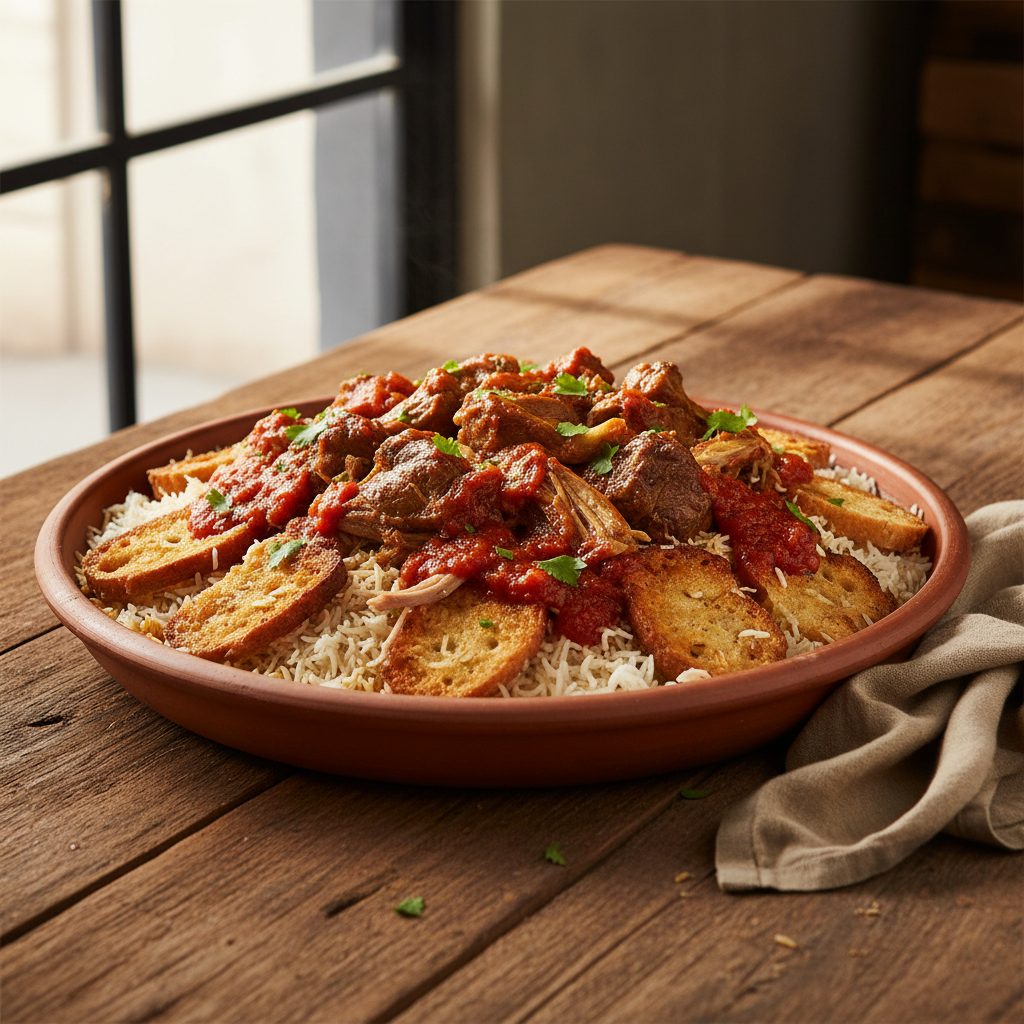
The classic Egyptian version is not subtle. Crisp baladi bread. White rice. Lamb or beef. Garlic. Vinegar. Tomatoes. A taste that is sharp, deep, saturated. The kind that does not ask whether you are ready.
Alexandria rejects the tomatoes and keeps a white, sour sauce. The Levant answers with chickpeas, pita, yoghurt, tahini and butter sizzling like the last word in an argument. Syria adds aubergine. Palestine adores lentils, chilli, lemon and garlic.
Every region claims its fattah is the real one. Naturally.
Nothing warms national pride as effectively as someone else’s recipe.
Fattah is more than food. It is a ritual of closeness. One great dish. Many hands. One table. No safe distances. You have to sit next to each other, reach into the shared bowl, divide the bread, the taste and the moment.
Diplomacy could learn from it.
Fattah also hides a hard lesson. Don’t waste. Don’t complain. Don’t wait for perfect ingredients. Have bread? Make a feast. No lamb? Take chickpeas. Short of plenty? Add imagination.
This is the cooking of people who know that dignity does not begin with a full larder.
When meat prices rise, fattah exposes the nerve of society. The festive platter shows more than many an economic report. Who has meat. Who has only rice. Who pretends to abundance. Who shares the last piece.
The dish is still alive. Not because it remembers the pharaohs. Because it remembers people.
Fattah is soft and crunchy. Poor and royal. Homely and monumental.
It is like a good story. It begins with crumbs and ends with a hunger for more.
The unlucky man will find a bone in his fattah.
## To crumble, to tear, to break
The name is an instruction manual. The Arabic root f-t-t means „to tear”, „to crumble”, „to break into pieces”. Bread, whether fresh, toasted, grilled or stale, is broken and becomes a sponge for all the other flavours. Fattah, also written fatta, fette or fetté, was for a long time not a recipe but a method. A way of using up bread and multiplying a meal in times when other food was scarce.
Only later did the cooking of leftovers turn into a symbol of abundance and hospitality. It is a rare career. Usually it goes the other way, and luxury ends up as leftovers.
## Pharaoh, Prophet and caliph
The Egyptian story begins with fotat, which means „crumbs” or „little pieces”. According to researchers, among them Dr Ahmed Afifi of Tanta University, under that name the dish reached the royal banquets of the pharaohs, and carvings in the temple of Sobek are said to confirm its elite status. Legend adds a priestess named Kara and a breakthrough feast: a roast sheep stuffed with bulgur and onion, covered with aubergine and served on crumbled bread soaked in vinegar and broth. A recipe thousands of years old sounds like a menu any self-respecting gourmet would order today.
Islamic tradition has fattah’s sister, tharid, regarded as one of the favourite dishes of the Prophet Muhammad. Thanks to this, combining bread, broth and meat acquired a sacred and prestigious dimension in the Muslim world.
The most political chapter was written by the Fatimids, who ruled from the 10th to the 12th century. In their time tomato sauce entered fattah, and the caliphs made it the official dish of the feast of Eid al-Adha. On the first day of the feast public banquets were held and enormous quantities of the dish were distributed among the people. It was a celebration, but also a legitimisation of power. A caliph who feeds rules more peacefully than a caliph who only makes speeches.
## The architecture of the platter
Fattah is a building, and each layer has its job. At the bottom, bread, fried in butter, grilled or toasted in the oven, preferably a day old and stale. On it, rice, fluffy and white in Egypt, or chickpeas in the Levant, a neutral background for strong aromas. Then the meat: mutton, lamb or beef, cooked slowly with cinnamon, cardamom and bay leaves. Finally two sauces in dialogue, a sharp vinegar-and-garlic one and a thick tomato one.
The whole art is decided by timing. The layers are arranged in a large, deep dish just before serving, so that the bread softens in the hot broth but keeps some of its crunch. Too early and you get mush. Too late and you get a rusk. Fattah demands a feel that cannot be written down in grams.
It is served on one great platter around which the family gathers. This is not decoration but the meaning of the dish: unity, the warmth of home and the host’s generosity.
## A map of crumbs
Every region of the Arab world has its own version, and each is of course the only true one. Egypt has the classic fatta with tomatoes and vinegar, Alexandria a white one, with vinegar and garlic only. The coast adds fish and prawns, and fattat kawari’, with animal trotters, is a festive delicacy.
Levantine fatteh, also called tis’iyyeh, is an entirely different, lighter take, eaten for breakfast or supper. No rice and no tomatoes. Chickpeas, pita, a thick yoghurt-tahini sauce with garlic, sizzling butter or ghee, cumin and pine nuts. Often without meat. Syrian fattet makdous combines fried aubergines, meat and pomegranate molasses; fattet djaj is based on chicken.
Palestinian fattet adas is a winter soup of red lentils poured over pita, with a sharp daqqa sauce of green chilli, garlic and lemon, especially popular in the Gaza Strip. The Gazan fetté gazzewié has rice cooked in broth with cinnamon and thin saj bread. In Sinai and southern Gaza they make fatit ‘ajir from unripe watermelons roasted in embers.
Further on, the family keeps growing. Jordanian mansaf with rice, meat, saj bread and the fermented yoghurt jameed. Iraqi tashrib with bread soaked in broth. Yemen has the sweet fattah tammer with honey and dates, and fatoot with bread toasted in clarified samneh butter. Morocco has rfissa, Tunisia al-lalababy, Libya al-mathrooda. The same technique, a thousand passports.
## A feast without meat
Egyptians and Levantines have long argued about who created the first fattah. Cairo points to continuity from fotat. Damascus and Beirut reply that the yoghurt versions are a separate, equally ancient path. The dispute is fierce, if friendly, like all family disputes at a shared table.
A more serious dispute is about price. Drastic inflation in Egypt has changed the character of Eid al-Adha. Prices of basic breakfast ingredients have risen from 10 to 30 pounds, meat has become unattainable for many, and the cost of feed, dependence on imports and currency fluctuations add their share. Fattah with lamb, the dish with which caliphs fed their subjects, has become a luxury good. The media write about feasts without meat. The platter that was meant to speak of generosity has begun to speak of inequality.
A Levantine proverb advises: if you have no lamb, take chickpeas. An Egyptian one replies that the unlucky man will find a bone even in his fattah, though the meat in it should be tender and completely off the bone. The first teaches resourcefulness. The second reminds us that resourcefulness is not always enough.
📖 Glossary
- fotat
- Dosłownie „okruchy” albo „kawałeczki”. Pod tą nazwą danie miało trafiać na królewskie bankiety faraonów.
- tharid
- Siostra fattah w tradycji islamskiej, danie z chleba, bulionu i mięsa uznawane za jedno z ulubionych dań proroka Mahometa.
- tis’iyyeh
- Inna nazwa lewantyńskiego fatteh, lżejszego, bez ryżu i pomidorów, z ciecierzycą, pitą i sosem jogurtowo-tahini.
- daqqa
- Ostry sos z zielonego chili, czosnku i cytryny, podawany do palestyńskiej fattet adas.
- chleb baladi
- Egipski chleb, który w chrupiącej postaci stanowi podstawę klasycznej fattah.
Frequently Asked Questions
What is fattah?
Fattah is a dish of broken bread that soaks up broth and becomes a sponge for all the other flavours. The classic Egyptian version combines crisp baladi bread, white rice, lamb or beef, garlic, vinegar and tomatoes. It is served on one large platter around which the family gathers.
What does the name fattah mean?
The Arabic root f-t-t means „to tear”, „to crumble”, „to break into pieces”. The bread is broken and becomes a sponge for all the flavours. For a long time fattah was not a recipe but a method of using up bread and stretching a meal in times of scarcity.
How are the layers of fattah arranged?
At the bottom lies bread, fried in butter, grilled or toasted, ideally stale. On top goes rice, or chickpeas in the Levant, then meat cooked with cinnamon, cardamom and bay leaves, and finally a vinegar-garlic sauce and a tomato sauce. The layers are assembled just before serving, so the bread softens but keeps a little crunch.
Why is fattah eaten on Eid al-Adha?
The Fatimids, who ruled from the 10th to the 12th century, made fattah the official dish of Eid al-Adha and added tomato sauce to it. On the first day of the feast public banquets were held and huge quantities of the dish were distributed among the people. It was a celebration, but also a legitimisation of power.
How does Egyptian fattah differ from Levantine fatteh?
Egyptian fattah has bread, rice, meat and sauces with tomatoes, vinegar and garlic, while the Alexandrian version is white, without tomatoes. Levantine fatteh, also called tis’iyyeh, is lighter: no rice or tomatoes, but chickpeas, pita, a yoghurt-tahini sauce, butter, cumin and pine nuts, often without meat.
Where does fattah come from?
The Egyptian story traces fattah back to the pharaonic fotat, „crumbs”, which according to researchers was served at royal banquets. Islamic tradition has its sister dish, tharid, regarded as one of the Prophet Muhammad’s favourite foods. Egyptians and Levantines still argue over who created the first fattah.
Related Questions
- What is fattah?
- What does the name fattah mean?
- How are the layers of fattah arranged?
- Why is fattah eaten on Eid al-Adha?
- How does Egyptian fattah differ from Levantine fatteh?
- Where does fattah come from?
🧠 Thematic Groups
- Historia: od faraońskiego fotat i legendy o kapłance Karze przez tharid w tradycji islamskiej po Fatymidów, którzy uczynili fattah daniem Id al-Adha.
- Technika: warstwy chleba, ryżu lub ciecierzycy, mięsa z przyprawami i dwóch sosów układane tuż przed podaniem, żeby chleb zmiękł, ale nie rozpadł się w papkę.
- Regiony: egipska i aleksandryjska fatta, lewantyński fatteh z jogurtem i tahini, syryjska fattet makdous, palestyńska fattet adas oraz kuzyni mansaf, tashrib i rfissa.
- Społeczeństwo: kuchnia odzysku, która stała się symbolem gościnności, i świąteczny półmisek, po którym widać egipską inflację i święta bez mięsa.
Tags:
fattah
fatteh
Egyptian cuisine
Arab cuisine
baladi bread
lamb
rice
vinegar-garlic sauce
Eid al-Adha
Fatimids
fotat
tharid
Levant
tis’iyyeh
leftover cooking
More in: Kuchnia niepolityczna
Content is created by Fundacja Dobre Państwo.
Edited and published by APA ONE, the Foundation's own AI-based editorial system.