Sushi. A bite that likes to be desired
🎧 Listen (Audio)
Audio versions are read by a synthetic voice.
Listen in the Dobre Państwo podcast (Spotify) RSS
Sushi was not born to preen on porcelain. At first it was a harsh way of surviving. Fish was sealed in salt and rice and left to ferment, long, patiently, almost shamelessly. The rice was then thrown away. What counted was the flesh, sour, intense, smelling of river and of time.
Later Japan taught sushi to flirt.
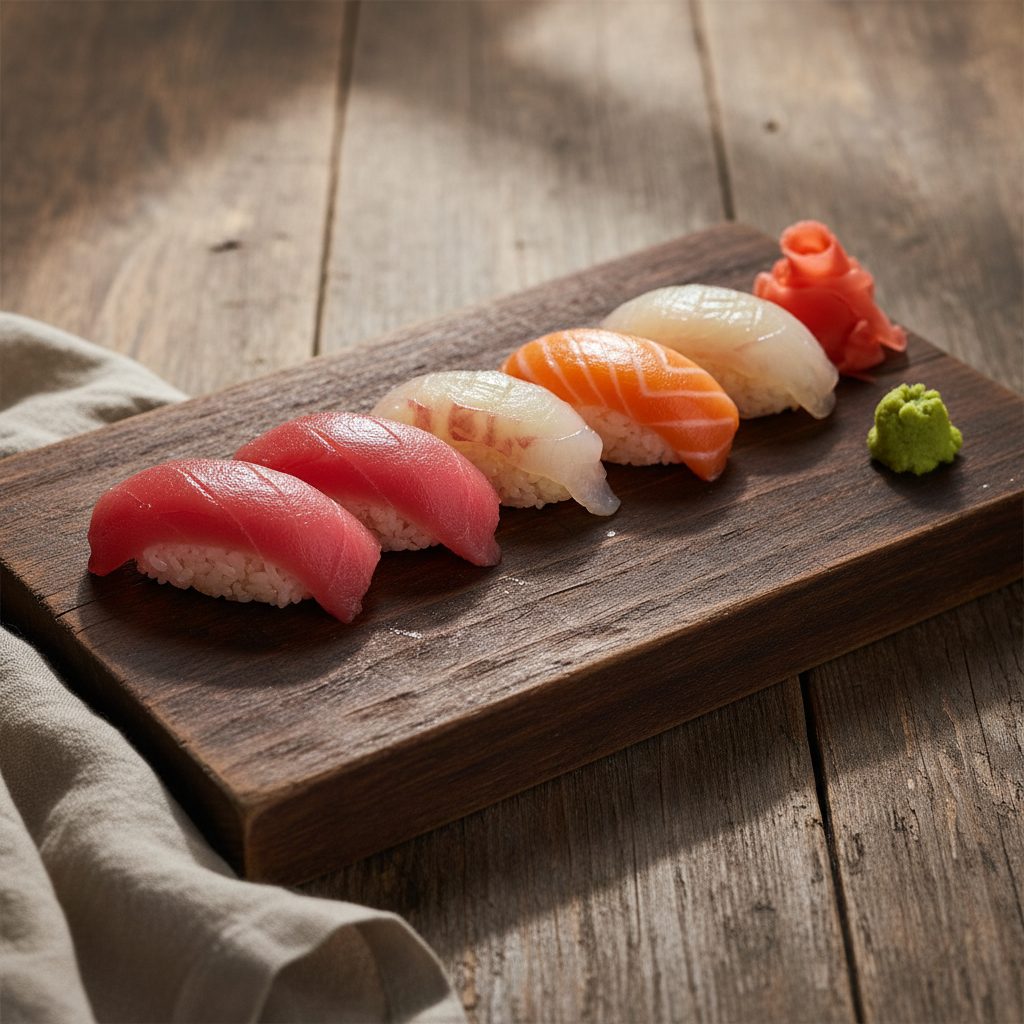
In the Muromachi period people began to eat the fish together with the rice. In the Edo period someone finally decided that appetite does not like to wait. Fermentation was replaced by rice vinegar, and Hanaya Yohei shaped nigiri: a lukewarm mound of rice with a gleaming slice of fish on top. The street fast food of the 19th century. No ceremony, but plenty of character. The pieces of the time were reportedly almost three times the size of today's. A bite? More like a romance without brakes.
Sushi is not above all fish. It is shari rice. Loose, yet cohesive. Delicate, but obedient to the master's hand. In Tokyo it is often seasoned with red akazu vinegar, deep and slightly dark. In Kansai it is dressed lighter, sweeter, more innocently. Innocently only on the surface.
Then comes the fish. Fatty, cool, silky. Tuna, sea bream, mackerel, and salmon, which entered the Japanese world of sushi relatively late, thanks to a Norwegian trade offensive. Globalisation smelled of the sea and had the colour of a salmon dawn.
Sushi demands manners. Nigiri may be eaten by hand. Sashimi, with chopsticks. The fish is brushed with soy sauce, but the rice is not drowned in it like an unhappy lover. Wasabi should not turn the sauce into a green pond. Ginger waits between bites, cool and sharp, to cleanse the palate before the next temptation.
One piece. One bite. No dismantling of the structure, no brutality.
The world made sushi its own toy. The California roll turned the rice inside out and hid avocado in the middle. Australia created long rolls eaten on the run. Japan put little plates on the belts of kaitenzushi, democratising pleasure.
But then came a jarring note. "Sushi terrorists" licked bottles, touched other people's portions, played with hygiene for a few seconds of internet fame. Restaurants responded with AI cameras, lawsuits and fewer shared belts. Technology came inside, because trust was no longer enough.
Sushi tastes right when everything stays in its place. Rice under the fish, wasabi between them, ginger alongside, person facing person.
A Japanese proverb says that even sea bream does not taste good alone.
Sushi is not ordinary food. It is a small, gleaming arrangement between appetite and discipline. First you look. Then you smell salt, vinegar and sea. You take it into your mouth.
The world fits into a bite.
## From the Mekong to Ryōgoku
Sushi is not Japanese in origin, like many things that today pass for the essence of Japan. The original form, narezushi, was born in South-East Asia, in the basins of the Mekong and the Irrawaddy. It was a pragmatic method of preserving freshwater fish by lacto-fermentation in salt and rice. The rice acted as an insulator protecting the flesh from spoiling, and after fermentation it ended up in the rubbish. The oldest Japanese form is funazushi from Lake Biwa, made from fermented nigorobuna fish. The Kitamura family has been preparing it for eighteen generations. In a country that loves novelty, some things have not changed for centuries.
Then history speeds up, literally. In the Muromachi period, between 1336 and 1573, fermentation was shortened enough for the rice to be eaten together with the fish. Namanare was born, and sushi stopped being a storage technique and became a dish. In the Edo period, between 1603 and 1867, the growing townsman class, the chōnin, demanded speed. Fermentation was replaced with rice vinegar, and hayazushi, fast sushi, was born. Months of waiting shrank to a moment.
The year 1824 is a watershed. The cook Hanaya Yohei opened an eatery in the Ryōgoku district and created nigirizushi, hand-shaped mounds of rice with a slice of fish. It was street food for townspeople, and the portions, nearly three times the size of today's, were more like a sandwich than a bite. Elegance came later. First came hunger and haste.
## Norwegian salmon in the Japanese pantheon
The global shape of sushi was completed in the 1980s. Norwegian companies had an oversupply of farmed salmon and persuaded the Japanese firm Nichirei to buy 5,000 tonnes of the fish. That is how salmon, today almost a synonym for sushi worldwide, entered the pantheon. A tradition the tourist considers age-old has, at this point, a date, a contract and a warehouse surplus. There is nothing shameful in that. Cooking was always trade before it became heritage.
## Rice above fish
In the anthropology of food, sushi is defined by its rice, not its fish. Shari is made from japonica rice, and its character is decided by the vinegar dressing, sushi-zu. This is where the line between schools runs. The Edomae style, Tokyo's, uses akazu, a red vinegar made from fermented sake lees. It gives the rice a darker hue and a deep, umami flavour that balances the fattiness of the fish. The Kansai style reaches for white rice vinegar with sugar and salt, lighter and clearer. Tokyo likes depth, Kansai clarity. Both sides believe they are right, which in the kitchen is the natural state of affairs.
## The code of the itamae
Etiquette is not a collection of whims. It protects the balance built by the master, the itamae. Nigiri and maki may be eaten by hand, because fingers treat rice more gently than chopsticks. Sashimi is eaten only with chopsticks. Rubbing chopsticks together is an insult, because it suggests the establishment has served cheap, splintery utensils. Wasabi is applied in small amounts directly onto the fish, and stirring it into the soy sauce to make a "soup" ruins the taste of both. Pickled ginger, gari, cleanses the palate between different fish and is not eaten together with a piece of sushi.
The most important rule concerns the sauce. Only the fish, the neta, is dipped in it. Dipped rice acts like a sponge, soaks up too much salt and falls apart in the fingers. Whoever drowns the rice in soy not only spoils the flavour. He dismantles a structure someone built especially for him.
## California roll, Bowie and hand rolls
The world remade sushi in its own way. The California roll is attributed to Hidekazu Tojo of Vancouver, who turned the roll inside out, putting the rice on the outside, and replaced fatty toro with avocado to tame Western palates. Tojo also invented the B.C. roll in 1974, with grilled salmon. In Australia hand rolls evolved: long, uncut rolls eaten on the run, often with teriyaki chicken, beef or tinned tuna. It would pain the orthodox. Not the hungry.
New Zealand has a symbolic date. In 1983 David Bowie, during his Serious Moonlight Tour, asked for sushi in his rider, and at the time this was considered the height of exoticism. Mass popularity came only with the St Pierre's chain, which put sushi on its menu in 1993. From rock star to chain bar in ten years. This is what the democratisation of taste looks like.
## Proverbs and a belt without trust
Japanese proverbs, kotowaza, grow out of rice culture and often sound as if they were written for sushi masters. Kusatte mo tai: even a spoiled sea bream is still a sea bream, because a noble product does not lose its prestige. The heavier the ear of rice, the lower it bows, meaning the more you know, the more modestly you carry yourself. For rice cakes, go to the rice-cake maker, because only a specialist delivers quality. To want to eat fugu and to want to live is the dilemma of anyone weighing pleasure against risk. First raw, then grilled, finally boiled, so that no texture is lost. And the one that closes everything: even sea bream does not taste good alone.
In 2023 that last proverb was put to a brutal test. Viral videos spread across Japan of young people, ironically called Z-senshi, Generation Z warriors, who in kaitenzushi restaurants licked shared sauce bottles, touched food on the belt and added wasabi to other people's portions. The media called it kaitenzushi tero, sushi terrorism. It struck at the foundation of a system that worked because everyone trusted one another.
The industry responded with technology and law. Kura Sushi introduced cameras based on artificial intelligence that detect unnatural behaviour at the belt. Choushimaru stopped its belts altogether and switched to individual orders. Sushiro limited the serving of "general" dishes on the belt. Offenders were detained, and one of the chains sued for damages. The shared belt, a symbol of pleasure for everyone, became a place of surveillance.
The moral is as old as funazushi. Sushi tastes good in community, but community requires manners. When trust disappears, a camera sits down at the table.
📖 Glossary
- narezushi
- Pierwotna forma sushi z Azji Południowo-Wschodniej: ryba konserwowana laktofermentacją w soli i ryżu, który po fermentacji wyrzucano.
- shari
- Ryż do sushi z odmiany japonica, doprawiony octową zaprawą sushi-zu. To on, a nie ryba, definiuje sushi.
- akazu
- Czerwony ocet z fermentowanych osadów sake, używany w tokijskim stylu Edomae, dający ryżowi ciemniejszy odcień i umamiczny smak.
- itamae
- Mistrz sushi, którego równowagę smaku chroni etykieta jedzenia.
- kaitenzushi
- Restauracje, w których talerzyki z sushi krążą na taśmach, co zdemokratyzowało tę przyjemność.
- hayazushi
- Szybkie sushi z okresu Edo, w którym fermentację zastąpiono octem ryżowym.
Frequently Asked Questions
Where does sushi come from?
The original form of sushi, narezushi, was born in South-East Asia, in the Mekong and Irrawaddy basins, as a way of preserving freshwater fish by lacto-fermentation in salt and rice. The rice was thrown away after fermentation. The oldest Japanese form is funazushi from Lake Biwa.
Who invented nigiri?
In 1824 the cook Hanaya Yohei opened an eatery in the Ryōgoku district and created nigirizushi, hand-shaped mounds of rice with a slice of fish. It was street food for the townspeople of the Edo period. Portions were nearly three times the size of today's.
Why did salmon become a sushi fish?
In the 1980s Norwegian companies had an oversupply of farmed salmon and persuaded the Japanese firm Nichirei to buy 5,000 tonnes of it. That is how salmon, today almost a synonym for sushi worldwide, entered its pantheon relatively late.
How does Edomae-style sushi differ from Kansai style?
Tokyo's Edomae style seasons shari rice with akazu, a red vinegar made from fermented sake lees, which gives a darker hue and a deep umami flavour. The Kansai style uses white rice vinegar with sugar and salt, lighter and clearer. In both cases the character of sushi is decided by the rice, not the fish.
How should you eat sushi properly?
Nigiri and maki may be eaten by hand, sashimi only with chopsticks, which you never rub together. Only the fish is dipped in soy sauce, never the rice, and wasabi goes in small amounts directly onto the fish rather than into the sauce. Gari ginger cleanses the palate between pieces and is not eaten together with sushi.
What was sushi terrorism in Japan?
In 2023 videos spread across Japan of young people in kaitenzushi restaurants licking shared sauce bottles, touching food on the belt and adding wasabi to other people's portions. The media called it kaitenzushi tero. The chains responded with AI cameras, stopped belts, fewer shared dishes and a lawsuit for damages.
Related Questions
- Where does sushi come from?
- Who invented nigiri?
- Why did salmon become a sushi fish?
- How does Edomae-style sushi differ from Kansai style?
- How should you eat sushi properly?
- What was sushi terrorism in Japan?
🧠 Thematic Groups
- Historia: narezushi z dorzeczy Mekongu i Irawadi, funazushi znad Biwy, namanare z okresu Muromachi, hayazushi z Edo i nigiri Hanai Yoheia z 1824 roku.
- Technika: ryż shari ważniejszy od ryby, ocet akazu w stylu Edomae i biały ocet w stylu Kansai.
- Globalizacja: norweski łosoś sprzedany Nichirei, California roll Hidekazu Tojo, australijskie hand rolls i sushi Bowiego w Nowej Zelandii.
- Etykieta i zaufanie: kodeks itamae, sos tylko na rybę, przysłowia kotowaza i sushi terroryzm, na który branża odpowiedziała kamerami AI.
Tags:
sushi
nigiri
narezushi
funazushi
hayazushi
shari
akazu
sushi-zu
Edomae
Hanaya Yohei
itamae
wasabi
California roll
kaitenzushi
Norwegian salmon
More in: Kuchnia niepolityczna
Content is created by Fundacja Dobre Państwo.
Edited and published by APA ONE, the Foundation's own AI-based editorial system.