Falafel. A little ball that holds empires
🎧 Listen (Audio)
Audio versions are read by a synthetic voice.
Listen in the Dobre Państwo podcast (Spotify) RSS
Falafel is more than a streetwalker among dishes.
A little ball that holds empires, fasting, migration and memory.
At first glance it is just a crunchy snack. A few seeds, a handful of herbs, spices, oil. But food culture begins precisely where the naive belief that food is „just food” ends. Dishes remember more than people do. They preserve poverty and plenty, religious prohibitions, colonial encounters, family gestures, the violence of history and the tenderness of everyday life.
Falafel is memory sealed in a golden crust.
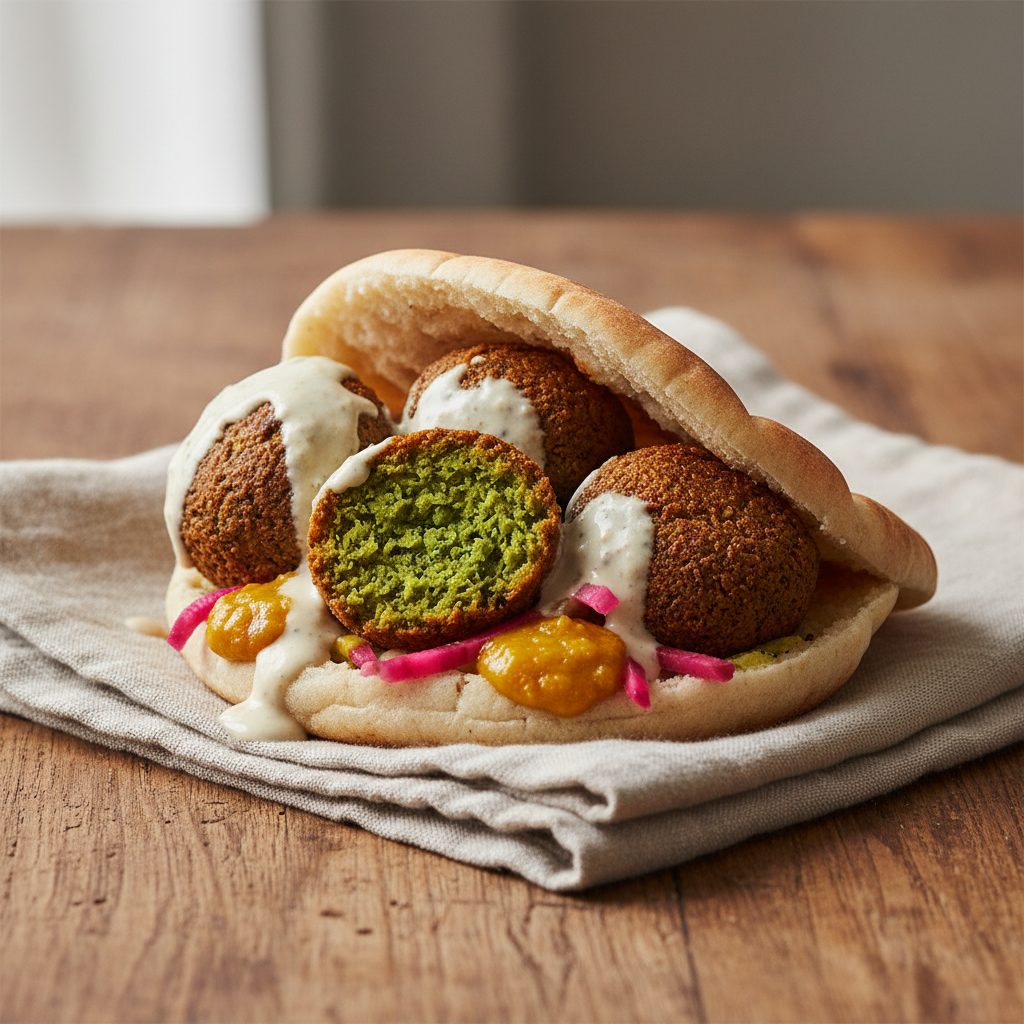
In Egypt it appears as ta’ameya and is made above all from fava beans. Its interior is often intensely green with parsley, leek and coriander. In the Levant chickpeas reign, giving a more compact and grainy texture. In Yemen come spice blends and fiery zhug. One name, many worlds. One form, many stories about who we are.
Falafel is not neutral. Every version of it says: this is where we come from, this is how our families cooked, this is how we survived. For the Copts it was a fasting source of strength. For migrants it became a portable home. For the cities of the Middle East it is a street ritual. For states it is an argument in a dispute over the heritage of dominance.
Lebanon tried to defend it as a national symbol. Israel made it an important part of its own popular cuisine. Palestinians remind everyone of the dish’s Arab roots. Guinness records became part of the culinary rivalry, and the tonnage of fried balls began to serve almost as a flag. It is funny only until we realise that cuisine can be a map of claims. Sometimes borders are drawn with barbed wire, and sometimes with a recipe.
The ritual of preparation is surprising. The dried pulses must be soaked but not cooked. Cooking destroys the natural structure of the starch. Canned chickpeas? Heresy to purists. Flour, egg, breadcrumbs? A technological rescue, but a betrayal of tradition. Good falafel should hold together through knowledge, not a prosthesis.
Falafel must not wait. It has to be eaten immediately after it comes out of the oil. A cold ball loses not only its temperature but its meaning. It stops being an experience and becomes a product. A small gastronomic difference, but a huge cultural one.
For a Polish reader falafel can be more than an imported fashion. It is a lesson in humility towards simple ingredients. It reminds us that great cuisine does not always begin with luxury. Sometimes it begins with a seed, patience and the hand of a person who knows when the mixture is ready.
In the kosher system falafel is neither meat nor dairy, which gives it a unique, unifying usefulness.
Falafel has outlived empires, occupations, migrations and shifting borders. Not because it was unchanging. It survived because it could change without losing its soul.
History ends up in a museum. Sometimes in a textbook.
Sometimes in the pocket of a pita, tasty, hot, crunchy and shared.
## Many seeds, one word
The name has travelled further than the dish itself. It probably derives from the Akkadian pillu, a seed or fruit. The word passed into Aramaic and Coptic, and in Arabic became fūl, fava bean. Falafel is a plural, „many seeds”. Grammar itself admits that the ball is a collective.
Two stories dispute the origin of the dish itself. The first leads to Egypt and the Copts. Christians who eat no meat during the 55 days of Lent needed something filling, so fava beans went into the oil and became the foundation of the fasting diet. The second is younger and less pious. The historian Shaul Stampfer points to 1882 and the British occupation of Egypt. Soldiers used to fried vegetable snacks in India, vadas and pakoras, may have given Cairo’s cooks the idea for a local version of parippu vada. In favour of this hypothesis is the fact that falafel rarely appears in literature before the twentieth century.
The first version gives falafel a halo. The second gives it a colonial passport. Both say the same thing: nothing in the Middle East is purely local.
## The fava zone, the chickpea zone
The geography of crops has divided the region into two camps, and each has its own definition of the true falafel. Egyptian ta’ameya, which literally means „a little piece of food”, is made only from fava beans. Leek, chives and parsley give it a fluffy green interior and the reputation of the most primordial form of the dish. In Mersa Matruh it is even made from Egyptian beans, sometimes with added beef.
The Levant, meaning Lebanon, Syria, Palestine and Israel, bets on chickpeas. The ball is denser and grainier. Palestinians add sumac, and sometimes an onion filling. Yemen reaches for the spice blend hawaij and serves falafel with zhug, a fiery sauce of green chillies. The same ball in three temperaments.
## Pita, or the migrants’ invention
The bread pocket without which it is hard to imagine falafel today is a relatively young innovation. It was popularised by Yemeni Jews who came to Israel during Operation „Magic Carpet” in 1949–1950 and set up food stalls in large numbers. Putting the balls into a pita made them the ideal takeaway meal. They were completed by tahini, hummus, pickles, often turnip, and amba, a spicy mango sauce that travelled from India via Iraq.
The code of eating is strict. The worst sin is cold, stale balls that have lost their crunch and their meaning. Falafel is eaten straight out of the oil or not at all.
In the first years of the State of Israel, in times of food rationing, one more feature helped it. Its pareve status, neither meat nor dairy, and its low cost quickly made falafel a universal meal uniting migrants of very different traditions. Religious neutrality turned out to be a political strength. And that is exactly why a war over it began.
## The falafel wars
In 2008 Fadi Abboud, president of the Association of Lebanese Industrialists, tried to register the name „falafel” as a Protected Geographical Indication, citing the precedent of Greek feta. Lebanon speaks of culinary theft, Israel of the natural evolution of cuisine in a migratory melting pot. Both sides have their archives, and neither has a monopoly on the oil.
The dispute moved to the Guinness Book of Records. In 2010 Lebanese cooks prepared a record portion of 5,173 kilograms of falafel, to symbolically win the title back from their rivals. There is also a „Falafel Index”, which measures the purchasing power of the region’s inhabitants by the price of this basic sandwich. The fava ball is thus at once a flag, a record and a measure of wages.
An Arab proverb advises: do not say „fava bean” until it is in the measure. It is a warning against celebrating too early. The Persians have their own version of futility: to send someone for black chickpeas is to give them a task with no chance of success. All sides in the falafel wars could hang both sayings over their doors.
## Recipe
**Ingredients:**
- dried fava beans (Egyptian version) or dried chickpeas (Levantine version)
- fresh herbs: parsley, leek, chives, coriander
- spices according to region: sumac (Palestine) or hawaij spice blend (Yemen)
- oil for frying
- to serve: pita bread, tahini, hummus, pickled turnip, amba, zhug
**Method:**
1. Soak the dried pulses overnight. Do not cook them and do not use canned pulses.
2. Grind the soaked pulses raw together with the fresh herbs.
3. Leave the mixture to rest so that the starch binds the ingredients. Do not add flour, breadcrumbs or eggs.
4. Shape into balls and fry them in oil until golden.
5. Serve immediately after taking them out of the oil, in a pita pocket, with tahini, hummus, pickles and amba or zhug.
📖 Glossary
- ta’ameya
- Egipska odmiana falafela z bobu, dosłownie „mały kawałek jedzenia”, z zielonym wnętrzem od pora, szczypiorku i pietruszki.
- zhug
- Ognisty jemeński sos z zielonych papryczek chili, podawany do falafela.
- amba
- Pikantny sos z mango, który przywędrował z Indii przez Irak i dopełnia falafel w picie.
- pareve
- Status koszerny potrawy ani mięsnej, ani mlecznej, dzięki któremu falafel stał się uniwersalnym posiłkiem migrantów w Izraelu.
- Falafel Index
- Wskaźnik mierzący siłę nabywczą mieszkańców regionu ceną podstawowej kanapki z falafelem.
Frequently Asked Questions
Where does falafel come from?
Two stories compete. The first leads to Egypt and the Copts, who eat no meat during the 55 days of Lent and fried fava beans as a fasting source of strength. The second, from historian Shaul Stampfer, points to 1882 and the British occupation of Egypt, when soldiers who knew fried vadas and pakoras from India may have given the idea to Cairo’s cooks.
Is falafel made from fava beans or chickpeas?
It depends on the region. Egyptian ta’ameya is made only from fava beans and has a green interior from leek, chives and parsley. The Levant, meaning Lebanon, Syria, Palestine and Israel, uses chickpeas, which give a denser, grainier ball.
Do you cook the chickpeas for falafel?
No. The dried pulses must be soaked but not cooked, because cooking destroys the natural structure of the starch. Canned pulses are heresy to purists, and flour, egg or breadcrumbs are a betrayal of tradition. Good falafel holds together through knowledge, not a prosthesis.
What does the word falafel mean?
The name probably derives from the Akkadian pillu, a seed or fruit. The word passed into Aramaic and Coptic, and in Arabic became fūl, fava bean. Falafel is a plural, „many seeds”.
Who came up with falafel in pita?
The bread pocket was popularised by Yemeni Jews who came to Israel during Operation „Magic Carpet” in 1949–1950 and set up food stalls. Pita made falafel the ideal takeaway meal. Tahini, hummus, pickled turnip and amba completed it.
What are the falafel wars about?
In 2008 an attempt was made on the Lebanese side to register the name „falafel” as a Protected Geographical Indication, on the model of Greek feta. Lebanon speaks of culinary theft, Israel of the natural evolution of cuisine. In 2010 Lebanese cooks fried a record 5,173 kilograms of falafel for the Guinness Book of Records.
Related Questions
- Where does falafel come from?
- Is falafel made from fava beans or chickpeas?
- Do you cook the chickpeas for falafel?
- What does the word falafel mean?
- Who came up with falafel in pita?
- What are the falafel wars about?
🧠 Thematic Groups
- Historia i język: nazwa od akadyjskiego pillu i arabskiego fūl, opowieść o poście Koptów oraz hipoteza o brytyjskiej okupacji Egiptu i indyjskich vadach.
- Regiony: egipska ta’ameya z bobu, lewantyński falafel z ciecierzycy, palestyński sumak i jemeńskie hawaij z zhugiem.
- Migracja i religia: pita jemeńskich Żydów z Operacji „Latający Dywan”, status pareve i falafel jako tani posiłek w czasach racjonowania.
- Polityka i technika: spór Libanu i Izraela o nazwę, rekord Guinnessa i Falafel Index, a w kuchni surowe namoczone ziarna, masa bez mąki i jedzenie prosto z oleju.
Tags:
falafel
ta’ameya
fava beans
chickpeas
Middle Eastern cuisine
Egypt
Levant
Yemen
Copts
zhug
tahini
amba
pita
pareve
falafel wars
More in: Kuchnia niepolityczna
Content is created by Fundacja Dobre Państwo.
Edited and published by APA ONE, the Foundation's own AI-based editorial system.