Pyry z gzikiem. A demand for a return to simplicity
🎧 Listen (Audio)
Audio versions are read by a synthetic voice.
Listen in the Dobre Państwo podcast (Spotify) RSS
We Want Bread was in June. Now we demand PYRY with gzik.
Not as a culinary curiosity.
Not as an item on a fashionable menu.
And not so that someone can serve us three little potatoes on a huge plate and call it a reinterpretation of tradition.
We demand pyry with gzik the way we remember them from home, when the Uprisings and the Greater Poland events were being won.
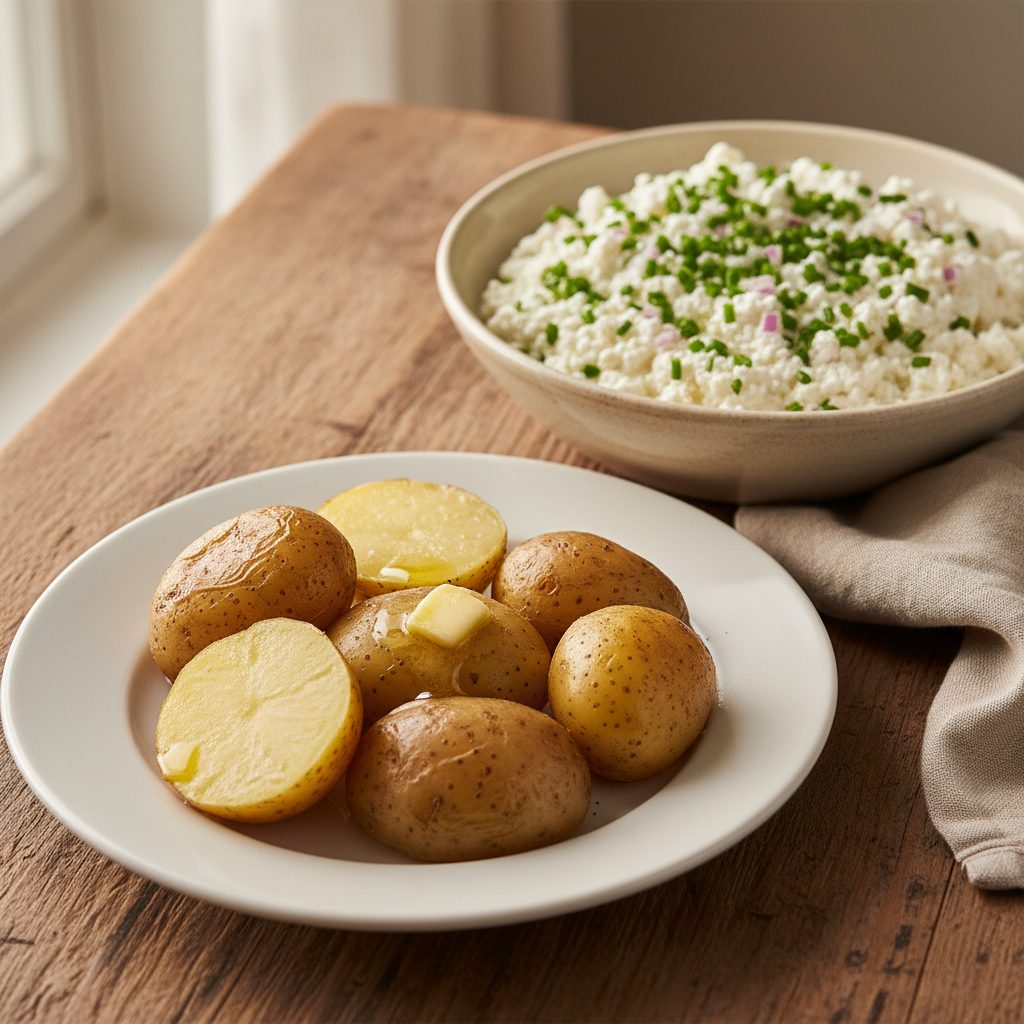
The pyry were to be scrubbed properly, but not peeled. In their uniforms, tej. They boiled in a big pot, and every other minute someone looked into the kitchen and asked whether they were done yet. The gzik waited in the kaśta. It smelled of white cheese, sour cream, cybula, chives, salt and pepper. No fussing. It had to be thick, seasoned fest, and such that the spoon would not sink in it.
Then the hot pyra went onto the plate. Cut in half. A knob of butter in the middle, which vanished at once into the steaming centre. Cold gzik beside it. And that was it.
The whole philosophy. You know it was not just dinner.
A table at which everyone somehow fitted closer together. It was a voice from the kitchen.
Want some more? It was grandma, mum or an aunt who was already adding more before you had time to answer. It was the smell of wet pyry, chives and onion, and of baking bread. The ordinary smell of an ordinary home, which comes back suddenly after years and grips you by the throat.
Childhood is not always remembered through great events. Sometimes it is remembered through taste.
Through a slice of bread and butter.
Through a mug of milk.
Through pyry with gzik.
Years later we understand that we were rich then. Not because there was a lot on the table. Because someone at that table was waiting for us.
In the silly season we have a serious demand.
We demand a return to simplicity.
To food that pretends to be nothing else.
To memory that smells of the kitchen.
To Poznań not only from photographs, but from the family table.
The pyry are to be hot. The gzik cold and solid. The butter real. The cybula finely pokrychana. As long as Someone is waiting close by.
Then all that is left is to sit down, spucnąć the lot with relish and for a moment be a child again, hearing: Eat, tej. It'll get cold. Longingly.
And you still remember. You curl up into conformity for safety in the dungeon of loneliness. The emptiness presses down; stuff yourself on the shadow of freedom.
## From bread to pyra
"We want bread" is not a slogan from a menu. The workers of Poznań wrote it on their banners in June 1956, when hunger stopped being a private matter for each kitchen and went out into the street. Bread was a political word then. Pyra is a household word. Between the one and the other lies the whole history of Greater Poland: first you fight, then you sit down at the table.
The Greater Poland Uprising at the turn of 1918 and 1919 went down in the region's memory as the one that succeeded. In Greater Poland people like things that succeed. Done properly, without fanfare, to the end. Pyry with gzik belong to the same order. Nobody composes songs about them, but everyone knows what they should look like, and everyone will notice when someone tries to "improve" them.
## A dictionary from the pot
In Greater Poland, pyra means potato. Not kartofel, not grula, not a dainty little potato from a tasting plate. Pyra. The word has grown so firmly into the region that Poznań is sometimes jokingly called Pyrlandia, and its inhabitants bear this with the dignity of people who know that an identity can be built out of a potato.
Gzik is white cheese mixed with sour cream, with onion and chives, seasoned with salt and pepper. That's all. It is not a sauce, not a spread, not a dip, though trendy restaurants sometimes present it that way. It is gzik. In some homes chopped radish goes into it, and that is the full extent of permissible heresy.
Then there is the dialect, which seasons the dish better than pepper. "Tej" is the Poznań way of calling out to the person you are talking to, something between a comma and a pat on the shoulder. "Fest" means strongly, properly, seriously. "Cybula" is simply onion, only pronounced so that everyone knows where you come from. Whoever says "eat, tej, or it'll get cold" is not giving an order. They are declaring love in the only language in which it does not sound ridiculous.
## The uniform, or discipline
Pyry w mundurkach, potatoes in their uniforms, are potatoes boiled in their skins. Scrubbed, but not peeled. The skin keeps the inside in check and does not let it soak up water and fall apart into mush. There is something of the Greater Poland character in this: order first, pleasure afterwards. Butter let into a halved, steaming pyra disappears into it at once. It is the only moment when a Greater Polander allows something to disappear without supervision.
The whole art lies in contrast. The pyra hot, the gzik cold. The pyra soft, the gzik thick. The pyra mild, the gzik sharp with onion. When one of these opposites blurs, the dish loses its point. A lukewarm pyra with lukewarm gzik is no longer dinner, just a compromise.
## A wealth you cannot see on the plate
It would be easiest to dismiss pyry with gzik as poor people's food. Potatoes, curd cheese, sour cream, onion. Nothing that has to be brought from far away, nothing that requires a chef's knife. And yet this food holds more abundance than many a tasting menu. Abundance does not come from the number of ingredients. It comes from someone serving you a second helping before you have had time to refuse.
That is why the demand for a return to simplicity is not nostalgia. It is a diagnosis. A world that serves a "reinterpretation of tradition" in three little potatoes has forgotten that tradition was never decoration. It was a way of being together. Pyry with gzik remind us that the most precious ingredient of a dinner does not lie on the plate. It sits opposite.
## Recipe
**Ingredients:**
- pyry (potatoes), well scrubbed
- white curd cheese (twaróg)
- thick sour cream
- onion
- chives
- salt and pepper
- real butter to serve
**Method:**
1. Scrub the pyry, but do not peel them. Boil them in their uniforms in salted water until tender.
2. Meanwhile, mash the curd cheese with a fork and mix it with the sour cream into a thick mass, so that a spoon does not sink in it.
3. Add finely chopped onion and chives, season with salt and pepper, fest. Set the gzik aside somewhere cool.
4. Cut the hot pyry in half and lay them on the plate, with a knob of butter in the middle of each.
5. Serve at once, with the cold gzik alongside. Eat, tej, or it'll get cold.
📖 Glossary
- pyra
- Wielkopolskie słowo na ziemniaka, od którego Poznań bywa żartobliwie nazywany Pyrlandią.
- gzik
- Biały ser rozrobiony ze śmietaną, z cebulą i szczypiorkiem, doprawiony solą i pieprzem.
- ziemniaki w mundurkach
- Ziemniaki gotowane w skórce, wyszorowane, ale nieobrane.
- tej
- Poznańskie zawołanie do rozmówcy, coś między przecinkiem a klepnięciem w ramię.
- fest
- W gwarze poznańskiej: mocno, porządnie, na serio.
Frequently Asked Questions
What is gzik?
Gzik is white curd cheese mixed with sour cream, onion and chives, seasoned with salt and pepper. It is not a sauce, a spread or a dip, although trendy restaurants sometimes present it that way. In some homes chopped radish goes into it.
What does the word pyra mean?
In Greater Poland, pyra means potato. The word has grown so firmly into the region that Poznań is jokingly called Pyrlandia.
How to serve pyry z gzikiem?
A hot pyra is cut in half, placed on the plate and topped with a knob of butter that melts straight into the steaming centre. Cold gzik is served alongside. The whole art lies in contrast: the potato hot and mild, the gzik cold, thick and sharp with onion.
What are potatoes in their jackets?
Pyry w mundurkach, potatoes in their uniforms, are potatoes boiled in their skins, scrubbed but not peeled. The skin keeps the inside in check and stops it from soaking up water and falling apart into mush.
What do the Poznań words tej fest and cybula mean?
„Tej” is the Poznań way of addressing the person you are talking to, something between a comma and a pat on the shoulder. „Fest” means strongly, properly, seriously. „Cybula” is simply onion.
How to make gzik for potatoes?
Mash the curd cheese with a fork and mix it with sour cream into a thick mass, so that a spoon does not sink in it. Add finely chopped onion and chives, season with salt and pepper, fest, and set aside somewhere cool.
Related Questions
- What is gzik?
- What does the word pyra mean?
- How to serve pyry z gzikiem?
- What are potatoes in their jackets?
- What do the Poznań words tej fest and cybula mean?
- How to make gzik for potatoes?
🧠 Thematic Groups
- Historia i pamięć regionu: od hasła „Chcemy chleba” z Poznańskiego Czerwca 1956 i Powstania Wielkopolskiego z przełomu 1918 i 1919 roku do domowej pyry.
- Język: gwara poznańska z pyrą, gzikiem, tej, fest i cybulą przyprawia potrawę i wyraża czułość, której nie da się powiedzieć inaczej.
- Technika: pyry w mundurkach, gęsty gzik i kontrast gorącego z zimnym, miękkiego z gęstym, łagodnego z ostrym.
- Kultura stołu: prostota jako diagnoza, a obfitość jako druga porcja nałożona, zanim zdążysz odmówić.
Tags:
pyry z gzikiem
pyra
gzik
curd cheese
sour cream
chives
jacket potatoes
Poznań
Greater Poland
Pyrlandia
Poznań dialect
Poznań June 1956
Greater Poland Uprising
Polish cuisine
More in: Kuchnia niepolityczna
Content is created by Fundacja Dobre Państwo.
Edited and published by APA ONE, the Foundation's own AI-based editorial system.