Żur kujawski. Poland ferments in one pot
🎧 Listen (Audio)
Audio versions are read by a synthetic voice.
Listen in the Dobre Państwo podcast (Spotify) RSS
Żur kujawski, żurki and żule gorge themselves out of greed, straight from the paw, and for reach online.
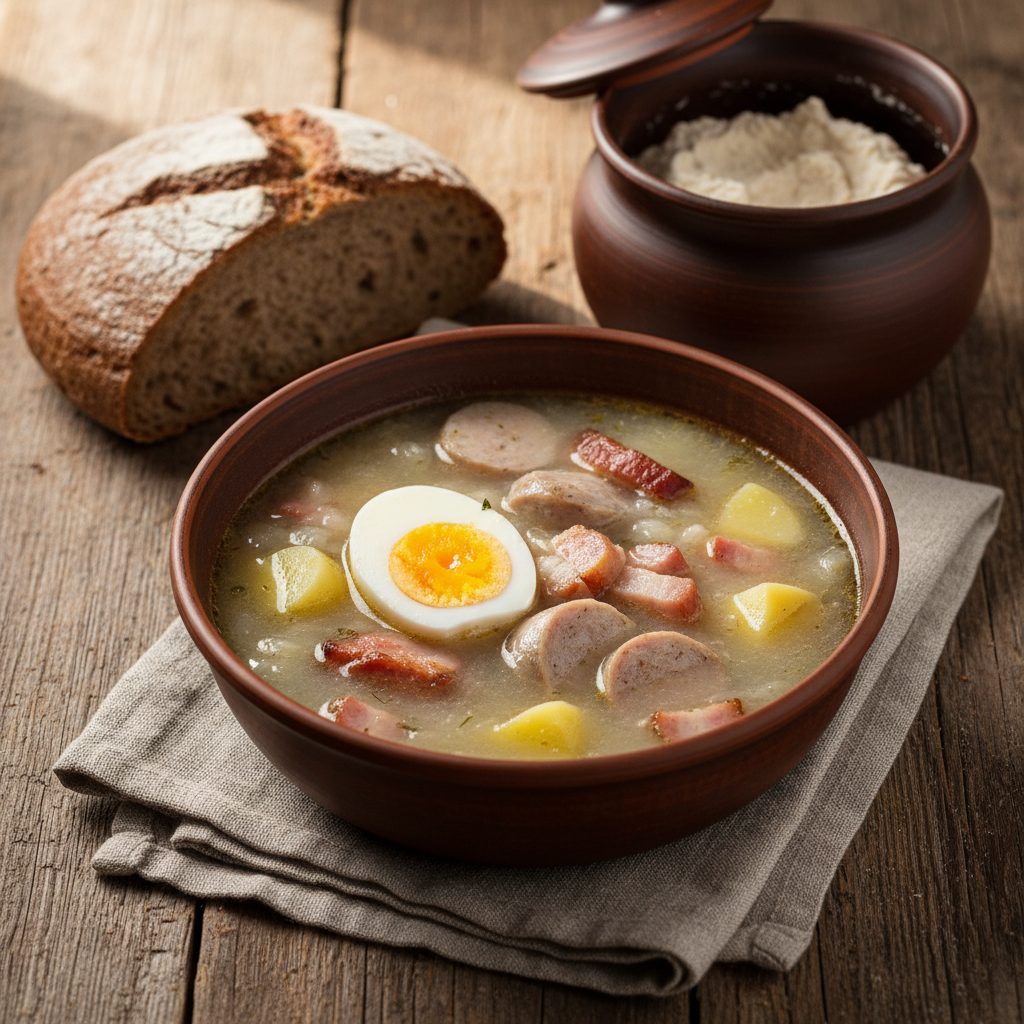
Żur kujawski, the sour rye soup of the Kujawy region, is not born of powder, advertising or the fantasies of a cook fresh from a course in plate storytelling. Żur begins with rye flour, lukewarm water, garlic and patience. The starter has to sour properly, not pretend to be sour like a clerk behind a counter window.
Best in a clay żurownik, a crock for souring. A stoneware pot or a jar will do too, as long as it is clean, because, as a man from the forests might say, from a dirty pot not even a saint could draw a decent sour brew.
In go rye flour, a crust of wholemeal rye bread, garlic, a bay leaf and allspice. Then a warm spot and four to six days of blessed peace. The starter has to work. It has to bubble, separate and smell so that the nose knows there will be no dessert here.
A well-soured starter is stirred before use, because life, sourdough and politics have one thing in common: the thickest stuff always settles at the bottom.
Then the stock is made. A poorer żur is cooked on water and vegetables. A richer one gets smoked meat, bacon, white sausage, onion and crackling. The starter is poured into the pot slowly, because whoever pours without restraint ends up eating his own sour face.
Marjoram must be rubbed between the palms. Not sprinkled like ashes on one's head, but crushed, its aroma woken, and only then thrown in. At the end you can add sour cream, potatoes, an egg, mushrooms or a thick slice of bread. In Kujawy żur was not meant to look good. It was meant to fill you up. Z żuru chłop jak z muru, "on żur a man stands like a wall", and not like someone out of a calorie-counting app.
How do the żurki differ?
Żur is usually older, sourer and cheekier. Żurek is its festive relative. It tends to be milder, whitened with cream, served with egg, sausage and the look of a waiter who has just invented fermentation.
Żur is a soup.
Żurek is the holiday version.
Żureczek is a marketing ploy for thirty-nine złoty.
And żule, the drunks, the down-and-outs? They are not, strictly speaking, a linguistic variant of żur. They are a social variant. One sound, one grimace and one helping of contempt are enough to move from food for the poor to poor people.
Żur sours in the pot. The żul sours outside the corner shop. The internet sours everywhere.
According to a Kujawy legend, the name żur came from someone who constantly żor the dish, that is, devoured it, ate it with appetite.
We devour without restraint.
Only more often it is not żur, but other people's stumbles, other people's poverty and other people's shame.
A Borowiak philosopher at the table once said that not everyone who has a spoon has a mind.
Not everyone who has reach has dignity.
Whoever makes a żul out of a human being often has soured aspic in place of a conscience himself.
Do you like it sour, or fatty?
## Starter, or the virtue of waiting
Żur begins with something modern cooking cannot stand: waiting. Rye flour, water, garlic, a crust of wholemeal rye bread, a bay leaf, allspice and a few days of silence in a warm corner. It cannot be hurried without cheating. Powder in a sachet imitates a starter the way a declaration imitates a deed. It looks similar, and leaves emptiness in the mouth.
A clay żurownik, a stoneware crock or a clean jar are not props from folklore but a condition of hygiene. The starter is alive. It bubbles, separates, settles its thick part at the bottom. Whoever fails to stir it before use will get a soup of nothing but water and good intentions.
## Lent, burial and resurrection
For centuries żur was Lenten food. Sour, plain, meatless, eaten day after day until everyone was sick of it. Hence the folk custom of the "burial of żur" at the end of Lent, when the pot of żur was poured out or buried with relief and mockery, as if seeing off a tiresome lodger.
But żur has a talent for comebacks. At Easter it returns transformed, as żurek with egg and white sausage, whitened with cream, festive, worthy of a table beside the blessed Easter basket. The same sour soul, different clothes. Polish cooking knows this mechanism well: what was buried with contempt is served with reverence a few days later.
## Żur, żurek, barszcz biały
The naming of żur is a map on which every village has its own borders. It is most often said that żur is made on a rye starter and barszcz biały, white borscht, on a wheat flour starter. Elsewhere the words mean the same thing, and the difference is set only by grandma's stubbornness. Żur is older and cheekier, żurek milder and festive, and żureczek is a diminutive from the price list, not from the kitchen.
Kujawy holds to the filling version. A poorer żur on water and vegetables, a richer one on smoked meat, bacon and white sausage, with onion and crackling. At the end, marjoram rubbed between the palms to wake its scent, and whatever happens to be at hand: potatoes, an egg, mushrooms, a thick slice of bread. Żur is not a dish to be photographed. It is a dish for work.
## Philosophy from beyond the forests
Kujawy's neighbours from the Tuchola Forest, the Borowiacy, supply this story with its best commentator. The Borowiak philosopher at the table needs no professorial chair and no footnotes. A spoon is enough for him, and the observation that not everyone who holds one has a mind. The proverb "z żuru chłop jak z muru" says the same thing more simply: food should give strength, not reach.
Here żur meets żul. A single sound separates soup for the poor from contempt for the poor. It is easy to laugh at the man outside the shop, harder to ask what went sour in him and why. A starter sours because that is its nature. A person sours because someone left him in a warm corner and forgot to stir.
So żur teaches something more than fermentation. It teaches that sourness can be nourishing if you keep watch over it, and poisonous if you pour it on others without restraint.
## Recipe
**Ingredients:**
- for the starter: rye flour, lukewarm water, a crust of wholemeal rye bread, garlic, bay leaf, allspice
- for the stock: water and vegetables, and in the richer version smoked meat, bacon, white sausage, onion
- marjoram
- to serve, as you like: sour cream, potatoes, egg, mushrooms, crackling, a thick slice of bread
**Method:**
1. Mix the rye flour with lukewarm water in a clay żurownik, a stoneware crock or a clean jar. Add the crust of wholemeal rye bread, garlic, bay leaf and allspice.
2. Set aside somewhere warm for four to six days, until the starter begins to bubble, separates and takes on a sour smell.
3. Cook the stock: on water with vegetables or, in the richer version, with smoked meat, bacon, white sausage and onion.
4. Stir the starter thoroughly and pour it slowly into the simmering stock, tasting, until the soup is as sour as you like it.
5. Rub the marjoram between your palms and add it to the pot.
6. Finally, whiten with sour cream if you wish, and serve with potatoes, egg, mushrooms, crackling or a thick slice of bread.
📖 Glossary
- żurownik
- Gliniane naczynie do kiszenia zakwasu na żur. Zamiast niego można użyć kamionki albo czystego słoja.
- zakwas żytni
- Mąka żytnia z letnią wodą, czosnkiem, skórką razowca, liściem laurowym i zielem angielskim, kiszona w cieple cztery do sześciu dni.
- pogrzeb żuru
- Ludowy zwyczaj z końca Wielkiego Postu, gdy garnek z żurem wylewano albo zakopywano z ulgą i kpiną.
- barszcz biały
- Zupa najczęściej odróżniana od żuru tym, że powstaje na zakwasie z mąki pszennej, a nie żytniej.
Frequently Asked Questions
How to make a sour starter for żur?
Rye flour is mixed with lukewarm water in a clay żurownik, a stoneware crock or a clean jar, and a crust of wholemeal rye bread, garlic, a bay leaf and allspice are added. The starter stands somewhere warm for four to six days, until it bubbles, separates and smells sour. It must be stirred well before use, because the thick part settles at the bottom.
What is the difference between żur and żurek?
Żur is usually older, sourer and cheekier. Żurek is its festive relative, milder, whitened with cream and served with egg and sausage. Żureczek is a diminutive from the price list, not from the kitchen.
What is the difference between żur and barszcz biały?
It is most often said that żur is made on a rye starter and barszcz biały, white borscht, on a wheat flour starter. Elsewhere the two words mean the same thing, and the only difference is grandma's stubbornness.
What is the burial of żur?
For centuries żur was Lenten food, eaten day after day until everyone was sick of it. Hence the folk custom of the „burial of żur” at the end of Lent, when the pot of żur was poured out or buried. At Easter żur returns as żurek with egg and white sausage.
What goes into żur kujawski?
A poorer żur is cooked on water and vegetables, a richer one on smoked meat, bacon and white sausage, with onion and crackling. At the end marjoram rubbed between the palms is added, and it is served with sour cream, potatoes, egg, mushrooms or a thick slice of bread.
Where does the name żur come from?
According to a Kujawy legend, the name żur came from someone who constantly „żor” the dish, that is, devoured it, ate it with gusto.
Related Questions
- How to make a sour starter for żur?
- What is the difference between żur and żurek?
- What is the difference between żur and barszcz biały?
- What is the burial of żur?
- What goes into żur kujawski?
- Where does the name żur come from?
🧠 Thematic Groups
- Technika: zakwas żytni kiszony cztery do sześciu dni w żurowniku, mieszany przed użyciem i wlewany powoli do wywaru, z majerankiem roztartym w dłoniach.
- Historia i obyczaj: żur jako jedzenie postu, ludowy pogrzeb żuru i powrót na Wielkanoc jako żurek z jajkiem i białą kiełbasą.
- Nazewnictwo: żur, żurek, żureczek i barszcz biały oraz kujawska legenda o tym, że nazwa pochodzi od pożerania.
- Komentarz społeczny: jedna głoska dzieli żur od żula, a zupę dla biednych od pogardy dla biednych i żerowania na cudzym wstydzie dla zasięgów.
Tags:
żur kujawski
żur
żurek
rye sourdough starter
rye flour
white sausage
marjoram
żurownik
fermentation
Kujawy
Borowiacy
Lent
burial of żur
barszcz biały
Polish cuisine
More in: Kuchnia niepolityczna
Content is created by Fundacja Dobre Państwo.
Edited and published by APA ONE, the Foundation's own AI-based editorial system.